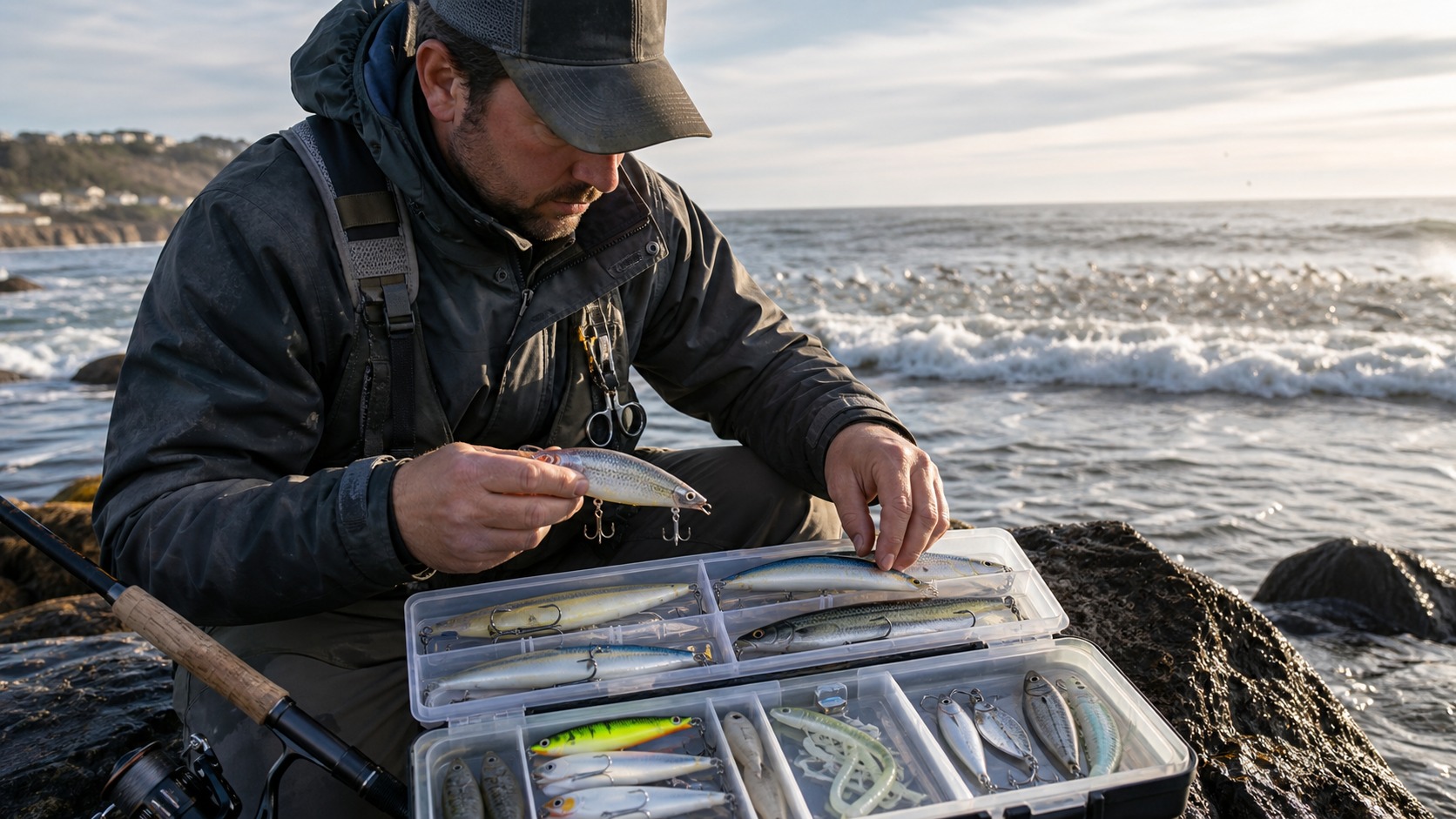
Striped bass lures work best when they match the shape and direction of bait moving through current. Best Lures for striped bass: Top Picks for More Strikes is built around a hatch listener approach, so it does not treat striped bass as a generic fishing target. The article focuses on schooling predator behavior tied to bait movement, tide, and silhouette, then connects that behavior to surf cuts, jetty rips, bunker schools, bridge pilings, river mouths, and nighttime current seams. That matters because a useful fishing plan should tell you what to do before, during, and after the cast. By the end, the goal is simple: pick plugs and metals with a reason without copying a one-size-fits-all routine from another species or another piece of water.
A: Test with this article-specific check: Ask whether the fish should see the offering from above, beside, or behind.
A: Watch with this article-specific check: Use line angle to keep the bait or lure in the useful lane longer.
A: Choose with this article-specific check: Let the first follow, bump, roll, or refusal tell you what to adjust.
A: Correct with this article-specific check: Handle the fish with tools that fit its mouth, body size, and release needs.
A: Protect with this article-specific check: End the session with one note about what the fish taught you.
A: Record with this article-specific check: Read surf cuts, jetty rips, bunker schools, bridge pilings, river mouths, and nighttime current seams before choosing the first cast.
A: Finish with this article-specific check: Shape the plan around schooling predator behavior tied to bait movement, tide, and silhouette rather than around a favorite lure.
A: Begin with this article-specific check: Keep pencil poppers, bucktails, darters, metal lips, swim shads, tins, and strong surf leaders ready, but only use the pieces that match the water.
A: Compare with this article-specific check: Treat spring migration, fall blitzes, night tides, and bait pushes along shore as a timing clue, not a guarantee.
A: Narrow with this article-specific check: Correct the mistake of choosing a lure by popularity instead of profile, depth, and current speed before changing everything else.
Start With Profile Before Color: Best Lures for striped bass for Striped Bass
Lure profile tells the first story before color or flash can help. For this specific title, the useful details are surf cuts, jetty rips, bunker schools, bridge pilings, river mouths, and nighttime current seams. That setting changes how far to cast, where to stand, how much noise matters, and whether the first move should be subtle or assertive. The important habit is to choose one reason for the cast before making it. If the reason is cover, cast to the edge that gives the fish an exit. If the reason is food, make the offering cross the likely feeding lane. If the reason is timing, wait for the window instead of forcing a dead spot.
This is where the setup stops being theoretical. In section 1, pencil poppers, bucktails, darters, metal lips, swim shads, tins, and strong surf leaders belong in the discussion only when they support schooling predator behavior tied to bait movement, tide, and silhouette. The common mistake is choosing a lure by popularity instead of profile, depth, and current speed, and it usually happens when anglers copy a tactic without reading the water in front of them. Use spring migration, fall blitzes, night tides, and bait pushes along shore as the seasonal backdrop, then make a controlled adjustment: angle, depth, size, speed, or distance. That keeps the article’s advice tied to striped bass instead of drifting into generic fishing talk.
Make the Lure Travel Like Local Forage: Best Lures for striped bass for Striped Bass
A lure needs to move through the water like something the fish already understands. For this specific title, the useful details are surf cuts, jetty rips, bunker schools, bridge pilings, river mouths, and nighttime current seams. That setting changes how far to cast, where to stand, how much noise matters, and whether the first move should be subtle or assertive. The important habit is to choose one reason for the cast before making it. If the reason is cover, cast to the edge that gives the fish an exit. If the reason is food, make the offering cross the likely feeding lane. If the reason is timing, wait for the window instead of forcing a dead spot.
The practical gear question becomes narrower here. In section 2, pencil poppers, bucktails, darters, metal lips, swim shads, tins, and strong surf leaders belong in the discussion only when they support schooling predator behavior tied to bait movement, tide, and silhouette. The common mistake is choosing a lure by popularity instead of profile, depth, and current speed, and it usually happens when anglers copy a tactic without reading the water in front of them. Use spring migration, fall blitzes, night tides, and bait pushes along shore as the seasonal backdrop, then make a controlled adjustment: angle, depth, size, speed, or distance. That keeps the article’s advice tied to striped bass instead of drifting into generic fishing talk.
Use Depth as the First Adjustment: Best Lures for striped bass for Striped Bass
Depth is often the cleanest adjustment because it changes the meeting point. For this specific title, the useful details are surf cuts, jetty rips, bunker schools, bridge pilings, river mouths, and nighttime current seams. That setting changes how far to cast, where to stand, how much noise matters, and whether the first move should be subtle or assertive. The important habit is to choose one reason for the cast before making it. If the reason is cover, cast to the edge that gives the fish an exit. If the reason is food, make the offering cross the likely feeding lane. If the reason is timing, wait for the window instead of forcing a dead spot.
A useful setup earns its place by solving this exact problem. In section 3, pencil poppers, bucktails, darters, metal lips, swim shads, tins, and strong surf leaders belong in the discussion only when they support schooling predator behavior tied to bait movement, tide, and silhouette. The common mistake is choosing a lure by popularity instead of profile, depth, and current speed, and it usually happens when anglers copy a tactic without reading the water in front of them. Use spring migration, fall blitzes, night tides, and bait pushes along shore as the seasonal backdrop, then make a controlled adjustment: angle, depth, size, speed, or distance. That keeps the article’s advice tied to striped bass instead of drifting into generic fishing talk.
Change Cadence Without Losing Contact: Best Lures for striped bass for Striped Bass
Cadence gives the lure personality, hesitation, panic, or weakness. For this specific title, the useful details are surf cuts, jetty rips, bunker schools, bridge pilings, river mouths, and nighttime current seams. That setting changes how far to cast, where to stand, how much noise matters, and whether the first move should be subtle or assertive. The important habit is to choose one reason for the cast before making it. If the reason is cover, cast to the edge that gives the fish an exit. If the reason is food, make the offering cross the likely feeding lane. If the reason is timing, wait for the window instead of forcing a dead spot.
The next cast should prove whether the chosen tools fit. In section 4, pencil poppers, bucktails, darters, metal lips, swim shads, tins, and strong surf leaders belong in the discussion only when they support schooling predator behavior tied to bait movement, tide, and silhouette. The common mistake is choosing a lure by popularity instead of profile, depth, and current speed, and it usually happens when anglers copy a tactic without reading the water in front of them. Use spring migration, fall blitzes, night tides, and bait pushes along shore as the seasonal backdrop, then make a controlled adjustment: angle, depth, size, speed, or distance. That keeps the article’s advice tied to striped bass instead of drifting into generic fishing talk.
Pick Hardware for the Fight, Not the Package: Best Lures for striped bass for Striped Bass
Hooks, leaders, and line matter because the strike is only the beginning. For this specific title, the useful details are surf cuts, jetty rips, bunker schools, bridge pilings, river mouths, and nighttime current seams. That setting changes how far to cast, where to stand, how much noise matters, and whether the first move should be subtle or assertive. The important habit is to choose one reason for the cast before making it. If the reason is cover, cast to the edge that gives the fish an exit. If the reason is food, make the offering cross the likely feeding lane. If the reason is timing, wait for the window instead of forcing a dead spot.
Now translate that read into the tools in your hand. In section 5, pencil poppers, bucktails, darters, metal lips, swim shads, tins, and strong surf leaders belong in the discussion only when they support schooling predator behavior tied to bait movement, tide, and silhouette. The common mistake is choosing a lure by popularity instead of profile, depth, and current speed, and it usually happens when anglers copy a tactic without reading the water in front of them. Use spring migration, fall blitzes, night tides, and bait pushes along shore as the seasonal backdrop, then make a controlled adjustment: angle, depth, size, speed, or distance. That keeps the article’s advice tied to striped bass instead of drifting into generic fishing talk.
Read Follows, Swipes, and Misses: Best Lures for striped bass for Striped Bass
Follows and missed strikes are not failures; they are feedback. For this specific title, the useful details are surf cuts, jetty rips, bunker schools, bridge pilings, river mouths, and nighttime current seams. That setting changes how far to cast, where to stand, how much noise matters, and whether the first move should be subtle or assertive. The important habit is to choose one reason for the cast before making it. If the reason is cover, cast to the edge that gives the fish an exit. If the reason is food, make the offering cross the likely feeding lane. If the reason is timing, wait for the window instead of forcing a dead spot.
The tackle choice should follow the water reading. In section 6, pencil poppers, bucktails, darters, metal lips, swim shads, tins, and strong surf leaders belong in the discussion only when they support schooling predator behavior tied to bait movement, tide, and silhouette. The common mistake is choosing a lure by popularity instead of profile, depth, and current speed, and it usually happens when anglers copy a tactic without reading the water in front of them. Use spring migration, fall blitzes, night tides, and bait pushes along shore as the seasonal backdrop, then make a controlled adjustment: angle, depth, size, speed, or distance. That keeps the article’s advice tied to striped bass instead of drifting into generic fishing talk.
Leave With a Smaller, Smarter Lure Box: Best Lures for striped bass for Striped Bass
A better lure box is organized by jobs, not by impulse purchases. For this specific title, the useful details are surf cuts, jetty rips, bunker schools, bridge pilings, river mouths, and nighttime current seams. That setting changes how far to cast, where to stand, how much noise matters, and whether the first move should be subtle or assertive. The important habit is to choose one reason for the cast before making it. If the reason is cover, cast to the edge that gives the fish an exit. If the reason is food, make the offering cross the likely feeding lane. If the reason is timing, wait for the window instead of forcing a dead spot.
At this point the rig, bait, or lure has a specific job. In section 7, pencil poppers, bucktails, darters, metal lips, swim shads, tins, and strong surf leaders belong in the discussion only when they support schooling predator behavior tied to bait movement, tide, and silhouette. The common mistake is choosing a lure by popularity instead of profile, depth, and current speed, and it usually happens when anglers copy a tactic without reading the water in front of them. Use spring migration, fall blitzes, night tides, and bait pushes along shore as the seasonal backdrop, then make a controlled adjustment: angle, depth, size, speed, or distance. That keeps the article’s advice tied to striped bass instead of drifting into generic fishing talk.
Make This Striped Bass Plan Your Own
Best Lures for striped bass: Top Picks for More Strikes should leave you with a working method, not a memorized script. Start with the environment, decide why a fish would use it, and choose tackle that helps the presentation fit that moment. When something changes, adjust one variable and watch the response. That discipline is what separates a lucky catch from repeatable progress. Keep notes on water level, clarity, forage, retrieve, bait condition, and landing details. Over time, those observations turn this guide into local knowledge that matches your water and your way of fishing.